Game, Set, Match: Decoding Beauty at Wimbledon.
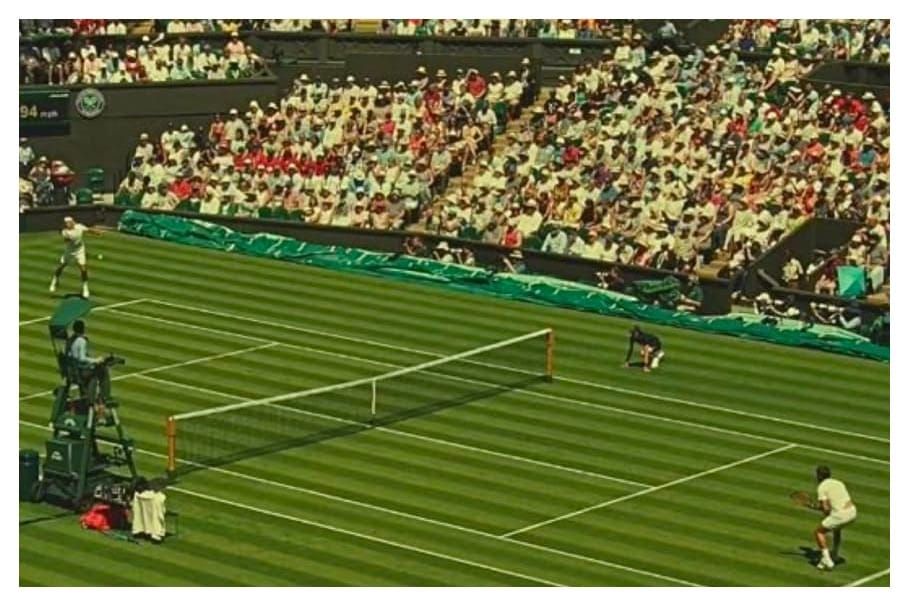
The first women allowed to play Wimbledon showed up in corsets. This was 1884 ankle-length white dresses, hats pinned in place, and faces bare by law. Not written law. The worse kind. Makeup belonged to actresses, a tan meant you worked in a field, and everyone simply knew it. The first Wimbledon face was pale, untouched, and obedient.
It stayed that way for forty years, until a Frenchwoman ruined everything beautifully.
Suzanne Lenglen arrived from Paris in 1919 with bobbed hair, a silk bandeau, lipstick you could see from the stands, and a habit of sipping brandy between sets. Paris was flappers and freedom; London was corsets and reputations and here was Paris, winning, on London's most sacred lawn. She was dressed by the couturier Jean Patou, which makes her the first athlete a fashion house ever used as a billboard, a century before anyone invented a word for it. The British press called her indecent. Then they photographed everything she wore for a decade.
And here is my favourite fact in this whole story: she got too famous for the venue. Crowds mobbed her matches until demand helped push Wimbledon to move to its bigger, current ground in 1922. Read that again. A stadium got built, in part, because one woman wore lipstick like she meant it.
After her, the dam broke slowly, then all at once. One glimpse of lace under Gussie Moran's dress in 1949 made front pages around the world and got her designer, Ted Tinling, banished from Wimbledon for 33 years. An institution only punishes that hard when it knows exactly what the image is worth. By the seventies, adornment on court wasn't rebellion anymore; when Chris Evert's diamond bracelet snapped mid-match in 1978, play stopped while she looked for it, and the "tennis bracelet" got named on live television. Jewellery, but the lesson counts: this sport names things, and the things sell for decades.
Then beauty stopped visiting and moved in. Avon's money started funding the women's tour in 1979. Gabriela Sabatini bottled her own perfume in 1989, at eighteen, writing the celebrity-fragrance playbook years before Hollywood caught on. Sharapova fronted Avon's fragrance in 2014. Shiseido signed Naomi Osaka as its global face in 2019. And by this decade the players skipped the middlemen entirely: Osaka built Kinlò, Serena built Wyn Beauty. A hundred years, one straight line from a banned face, to a rented face, to players owning the shelf.
Which brings us to this fortnight, and the photographs you've already scrolled past. Cover the outfits and look only at the faces: slicked bun, brushed-up brows, skin luminous but never dewy, a nude lip. A hundred celebrities, one face. And after everything you've just read : Lenglen's lipstick, Gussie's lace, decades spent fighting for the right to a face of one's own — that sameness should stop you. Nobody forced it this time. The uniform came back voluntarily, because in the world's most photographed garden, looking like you belong is worth more than standing out. What that belonging costs, and who's cashing it, is a money story — we broke it down number by number in today's carousel.
SÉRA's Verdict: Women spent a century fighting this lawn for the right to their own face and won. This fortnight, a hundred of the most photographed women alive used that right to wear the same one. The lipstick that was once rebellion is now a uniform, and the uniform is a business plan nobody in that box is expressing herself, she's purchasing belonging, and belonging currently retails as "effortless." We find it brilliant and a little bleak. But a century of face rules teaches one thing: every uniform eventually produces its Lenglen. Somewhere outside the royal box is the face that breaks this one and the smartest money in beauty should be hunting for her, not another glazed bun.