Why Louis Vuitton Is the Kardashians of Beauty
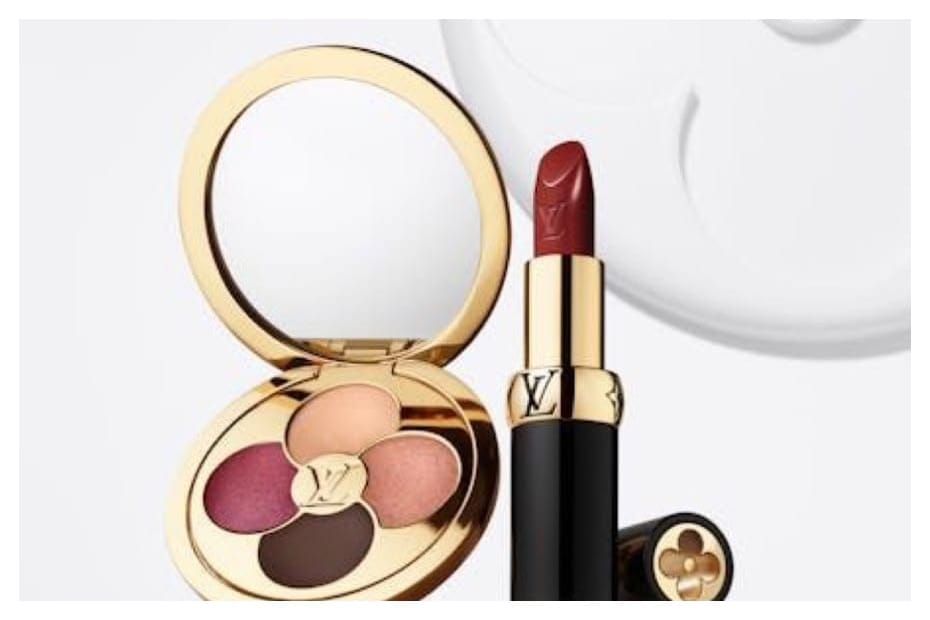
In August 2025, Louis Vuitton launched its first ever lipstick. The price? $160. That's about ₹15,400 for a single lipstick.
To put that in perspective, you could buy three Chanel lipsticks for the same money and still have change left over. It's almost twice what Hermès charges for its lipstick, and Hermès is the brand most people think of as the most exclusive in the world.
It's a strange move for Louis Vuitton. This is the brand that turned admirers into owners. Not with trunks or big leather bags, but with a little canvas pouch or a keychain: small enough to afford, with a Monogram famous enough to be recognised from across the room.
For years, that was the quiet genius of Louis Vuitton. It felt just within reach.
Lately, that reach seems to be moving further away. And a ₹15,400 lipstick might be the loudest sign yet.
We've seen this story before. The Kardashians started out as the family everyone watched and felt they knew. Then the money got bigger, the lives got further away, and they went from famous to untouchable. Louis Vuitton seems to be taking the same route.
The three kinds of luxury
The luxury industry often splits itself into three levels: accessible, aspirational and absolute. Picture it as a pyramid. The lower the level, the more people can buy in, and the less exclusive it feels. One catch: a brand doesn't sit on one level for everything it sells. The same house can sell a bag that's almost out of reach and a lipstick almost anyone can buy. So the pyramid below isn't about how grand a brand is. It's about how easy it is to get in.
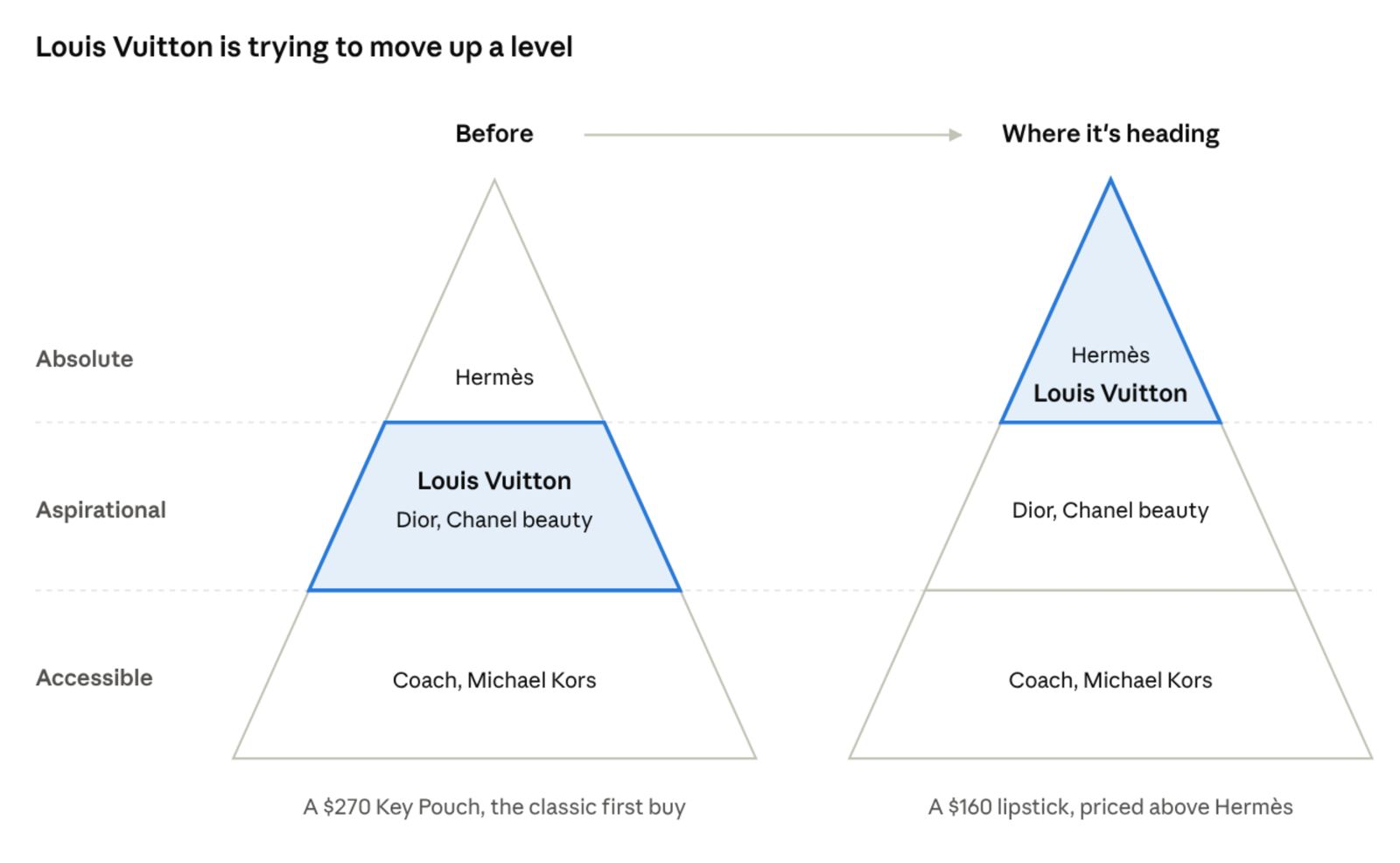
Accessible luxury is the widest level. Brands like Coach, Michael Kors and Kate Spade sell a designer name at a price many people can pay without much planning. The industry sometimes calls this "masstige": mass plus prestige. These brands make their money on volume, selling a lot, often, and through outlet stores and sales. You get the label, but not much rarity, because almost anyone can have it too.
Aspirational luxury is the middle, and it's where most luxury shoppers are. Dior, Chanel, Gucci, Prada and, for most of its history, Louis Vuitton all live here. These houses sell two things at once. There's the expensive core, the bags and clothes that relatively few people buy. Then there are entry-price products, a perfume, a wallet, a keychain, that let far more people own a small piece of the same name. The bags keep the brand desirable. The smaller things bring in the volume.
Beauty is the most common of those entry-price products. A lipstick or a perfume costs a fraction of a bag but carries the same name, so it's often someone's first purchase from a house. The industry calls this the halo effect: the bag makes the lipstick feel special, and the lipstick keeps people close to the brand until they're ready for the bag.
Absolute luxury is the narrow top, and Hermès is the clearest example. Here the economics flip. Selling more would make the brand less special, so the business is built on staying scarce. Hermès famously limits how many Birkins it makes, so demand always runs ahead of supply. Even its smaller things aren't treated as a way in. Its lipstick costs $81, not far from Chanel's, but it's sold as a piece of Hermès in its own right, not as a first step towards a bag.
Louis Vuitton built its empire in the middle, on canvas pieces that brought in an enormous number of first-time buyers. But over the last few years, a pattern has shown up. The entry-price pieces are getting fewer and more expensive, and the brand is shifting from volume towards scarcity. In other words, it's trying to climb from the middle of the pyramid to the top.
The first signs are in the small things, the pieces that used to bring new buyers in. In 2021, Louis Vuitton quietly discontinued its canvas Toiletry Pouch. The Key Pouch, for many people their first Louis Vuitton, has gone from $270 to $400 (about ₹38,500). Even the Neverfull MM, its best-known canvas tote, rose from $2,030 to $2,240 (about ₹2.16 lakh) in just over a year.
Every luxury house has raised prices since 2021, and some of that is simply inflation. But prices in the US have risen about 24% over that time, and the Key Pouch has gone up nearly 50%, about twice as fast. When a brand raises its cheapest products faster than the cost of living, it isn't just keeping up. It's moving the entry point further away from the people who used to start there. That's what climbing the pyramid looks like.
Then came the lipstick
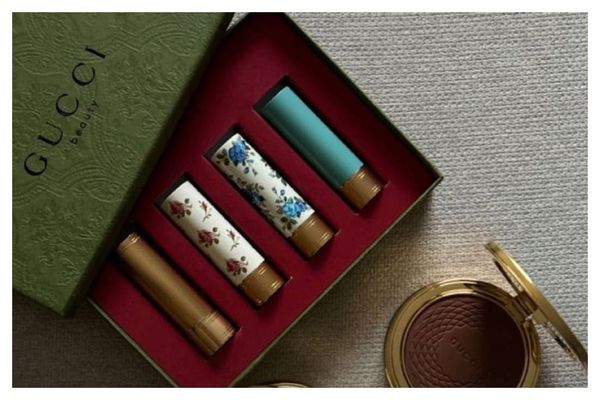
Which brings us back to beauty, the one entry point every aspirational house protects. It's why Celine launched lipstick in 2024, and why houses like Valentino and Prada have built entire beauty lines. Beauty is how you meet the customers who might buy the bag one day.
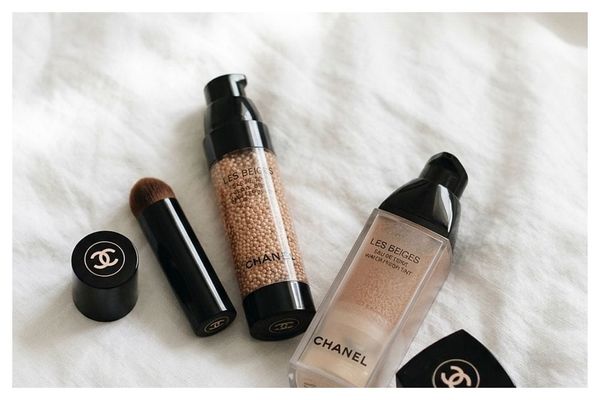
Chanel is the clearest example. Its medium Classic Flap now costs $11,700 (about ₹11.3 lakh) in the US, not far off the $13,500 (about ₹13 lakh) Hermès charges for a Birkin 25. Yet Chanel still sells a lipstick for $50. Chanel made the bag untouchable and kept its beauty affordable.
Now line up the prices. Dior is $48. Chanel, $50. Tom Ford, $62. Hermès, $81. And then Louis Vuitton, at $160.
That price isn't an invitation. It's a filter. Pauline Brown, who used to run LVMH in North America, didn't mince words: "There's virtually no market for a $160 lipstick." To her, it was "a strategic play" to protect Louis Vuitton's status.
LVMH would tell you otherwise. It says the lipstick is meant to win over its richest clients and younger ones too. But think about it. If you're young and want your first piece of luxury, are you really starting with a $160 lipstick when Chanel's costs a third of that?
The way it's sold tells you who it's really for. It comes in a metal case covered in the Monogram, with free engraving. Once you own the case, every new shade is a $69 refill (about ₹6,600). That's more than a whole Chanel lipstick, for the bullet alone. You'd have to really love Louis Vuitton to buy into that. Which is exactly the point.
As Elana Drell Szyfer of the Fashion Institute of Technology put it: "In an era of people paying $1,000 for a Labubu... what is $160 for an LV lipstick?" For the people Louis Vuitton has in mind, nothing at all. For everyone else, it's a wall.
The timing makes it even bolder. According to Bain & Company, luxury lost about 20 million customers in 2025 alone, mostly aspirational buyers who were priced out. Everyone else in luxury is using beauty to win those people back. Louis Vuitton used it to draw a line.
SÉRA's Verdict
The Kardashians didn't become untouchable overnight. It happened step by step, and none of it was an accident. Louis Vuitton is following the same plan: fewer small pieces, prices rising faster than inflation, and now a first-ever lipstick that starts at $160. That lipstick was never meant to be anyone's first Louis Vuitton. It's there to tell you there isn't a cheap way in anymore.
Our take? Don't let the Monogram do the maths for you. Louis Vuitton sells the refill, the same lipstick without the case, for about ₹6,600. So by its own pricing, roughly ₹8,800 of what you pay is for a metal case with a logo on it. The extra money isn't buying you a better lipstick. It's buying you the case. If you love it and plan to keep refilling, that's your call. If you just want a luxury lipstick, you're paying ₹8,800 to show off a logo which other luxury houses will sell you one for a third of the price.