Why Your Foundation Doesn't Match Your Neck
There is a specific moment of panic that happens right after you finish your makeup. In your room mirror everything looks seamless, and you walk out the door with absolute confidence. Then you catch your reflection in a car window, or a phone selfie in natural sunlight, and your face and your neck suddenly belong to two different people. Your base is sitting there looking distinctly, aggressively yellow.
I review and work with base products almost every day and I've collaborated with brands like Maybelline and MARS on their BB creams and base products and I notice this glitch constantly.
It happens to me too. Recently I was shooting a skincare video at the end of a long PR day, just trying to finish whatever was left to film. In the pile was a BB cream a brand had sent over, and on the first swipe it blended beautifully. By the end of the shoot it had oxidized so badly on camera, visibly ashy under my eyes that I had to scrap the video entirely.
Most people assume they picked the wrong shade. Usually they picked the wrong undertone and the industry gave them no way to know.
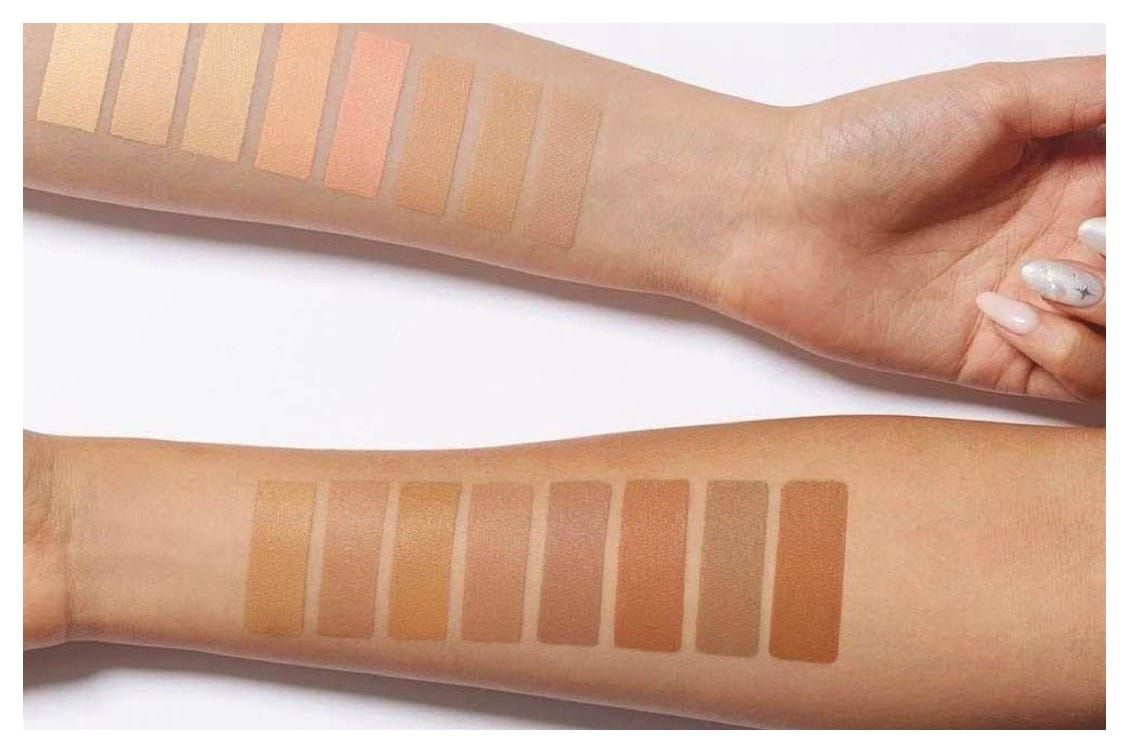
The root issue is a lazy generalization: if you have South Asian skin, you have warm, yellow undertones. Looking at my own skin, and at the vast spectrum of skin I see in this job, Indian skin actually carries neutral, cool, and very often olive undertones a muted, greenish tint that standard drugstore tubes completely ignore.
The fairness conditioning makes it worse. We are still trained to buy a shade or two lighter to look fair and radiant, and when a light shade carries intense yellow, it turns ashy or neon on rich Indian skin the moment you step into real daylight.
And the ranges are thin. From the base products that cross my desk, a typical drugstore lineup here carries about six shades, with some brands now expanding to nine. Fenty launched with forty in 2017. Brands are finally adding true Indian neutrals and olives, but until the shade card admits how varied Indian skin actually is, the yellow mask isn't a user error. It's built in.
Breaking the cycle takes two minutes, and it starts with trusting neither store lighting nor flash-lit shade matches online. Stop swatching on your hand — your hand does not live on your face. Swipe the product from your jawline down onto your neck, then walk away for five minutes. Let it sit, see how it reacts with the air, and check whether it oxidizes, mine did on camera.
Séra's Verdict : We are constantly sold the idea that looking radiant means looking fairer or warmer than we are. Makeup is meant to enhance your actual skin tone, not bury it under artificial warmth. The right match looks like your skin on its best day and seamless from your forehead to your collarbone.